Showing posts with label Embraer. Show all posts

April 17, 2012

Embraer E-Jet deliveries remain flat in 1Q


Embraer today reported commercial aircraft deliveries stagnated again in the first quarter and its backlog of orders for the E-Jet family slightly declined.

The Brazilian airframer says it delivered the 21 commercial aircraft in the first three months of 2012, or one more than during the same period last year and the same as in the first quarter of 2010. Meanwhile, Embraer signed orders for 12 new commercial aircraft in the first quarter, including 10 E195s to Brazilian low-cost airline Azul, one E190 to BA CityFlyer and one E170 to JAL.

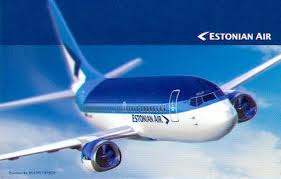
Its overall backlog declined to 240 aircraft, including 150 orders alone for the E190. During the quarter, Bulgaria Air and Estonia Air received new E-Jets for the first time. Embraer also delivered 12 new light Phenom business jets and one large business jet during the first quarter.
The value of Embraer's firm order backlog now totals $14.7 billion, the company says.


Flight Global

March 29, 2012

FIDAE: Embraer confirms new African buyers for Super Tucano


Embraer Defense and Security has announced its receipt of orders for the sale of EMB-314/A-29 Super Tucanos to African countries Angola, Burkina Faso and Mauritania. The total value of the deals comes to $180 million, the company says, while declining to specify the exact number of aircraft involved.

Three aircraft have already been delivered to the Burkina Faso air force, which is using them on border patrol missions, Embraer says. Angola has ordered six for the same mission and will receive its first three examples this year. Mauritania will get its first of an undisclosed number of the aircaft in 2013, and will operate its aircraft on counter-insurgency missions.

"The Super Tucano is highly efficient and presents low operating costs. Its capability for surveillance and counter-insurgency missions makes it ideal for service on the continent of Africa," says Embraer Defense and Security president Luiz Carlos Aguiar. With the new orders nine air forces have chosen the Super Tucano, with six currently operating it, Embraer says.

The Brazilian airframer is also confident of winning the second incarnation of a US Air Force competition for a light attack aircraft, which will be repeated after the service said there were problems with the original tender process. Embraer and Sierra Nevada won the initial competition late last year with the Super Tucano, after the air force eliminated a rival AT-6 proposal from Hawker Beechcraft and Lockheed Martin. The contest is to supply an initial 20 armed turboprops to the Afghan air force


Flight Global

March 23, 2012

Embraer confident of Light Air Support victory


Embraer remains confident its EMB-314/A-29 Super Tucano will be speedily reselected for the US Air Force's Light Air Support (LAS) programme, so long as requirements remain unchanged.  The choice of the Brazilian-built trainer/light attack aircraft - which Embraer had bid alongside US partner Sierra Nevada - was overturned earlier this year after rival Hawker Beechcraft filed a lawsuit, following the rejection of the Wichita-based airframer's AT-6.

"If they don't change the requirements, we are 100% sure they will decide again for our aircraft," says Luiz Carlos Aguiar, the head of Embraer's defence business. "It is the only solution for this mission. If they need additional information, we will provide that." He says Embraer expects to receive word from the USAF "within weeks".

The USAF planned to buy 20 Super Tucanos as an urgent operational requirement to provide the Afghan air force with a counter-insurgency aircraft fleet, and the decision to overturn the selection was received with fury in Brazil. "It was a great surprise for us. We did not expect the reversal," says Aguiar.

"The US needs something off the shelf, and we have the solution," he says. "The difference between the two programmes is quite deep." Embraer and Sierra Nevada had committed to creating 1,200 jobs in the US supply chain as a result of the contract, he adds.

Aguiar says that any change to the terms of the competition could alter things. "If they do that, well, we would have to wait and see, but I cannot understand why they would do that," he says. He says the upheaval has not changed Embraer's commitment to establishing a foothold in the "most important defence market in the world", which the manufacturer believes would be a platform for establishing further deals with NATO allies. The LAS contest was one of the defence unit's first breakthroughs in a country where Embraer has enjoyed considerable success with its regional and business jet products.

Flight Global

March 5, 2012

Qatar Executive looks to expand fleet with Global 7000 and 8000


Qatar Executive, the all-Bombardier charter arm of Qatar Airways, is in talks with the Canadian manufacturer about bolstering its fleet with Global 7000 or 8000 jets, which are under development. However, airline chief executive Akbar Al Baker says he is also considering Embraer or Gulfstream aircraft, so as not to be dependent on one manufacturer.

"We want to stay with Bombardier but we are also looking at Gulfstream as an alternative supplier," he told Flight International in an interview in Doha. "We don't like to put all our eggs in one basket. We could take both [Bombardier and Gulfstream] or Embraer if they suit our corporate requirements."
Qatar Executive operates three Challenger 605s, two Global 5000s and one Global Express XRS, with much of its business coming out of Russia as well as the Gulf region.

Flight Global 

March 1, 2012

Air Force Cancels Embraer Light Attack Contract


The Air Force Tuesday cancelled its contract for a Light Air Support aircraft with Sierra Nevada Industries and Embraer, will reopen competitive bidding, and has announced an investigation into the way the previous bid was handled. The Air Force raised eyebrows in December when it kicked Hawker Beechcraft's AT6B out of the running for the $1 billion contract. That left only Sierra Nevada's assembled-in-Florida version of the Embraer Super Tucano in the competition and the contract was awarded a few days later. "While we pursue perfection, we sometimes fall short, and when we do we will take corrective action," Secretary of the Air Force Michael Donley said in a statement. Donley would not say why the contract was overturned, only that senior officials were not satisfied with the documentation supporting the award. Rep. Mike Pompeo, R-Kan., said a sudden reversal like this is rare and significant. "The Air Force does not do that lightly," Pompeo told The Washington Post. "This is highly unusual, which suggests that there is going to be a very broad re-look of the entire process."

Of course, Hawker Beech welcomed the news. The company took the government to court to challenge the procedural process of the bid and that case is still ongoing. Hawker Beech Corp. Chairman Bill Boisture has been vocal in his battle with the government over the bid and said Tuesday's decision was welcome news. "We commend the Air Force for this decision and we believe strongly it is the right thing for the Air Force, the taxpayers and the people of Hawker Beechcraft," he said in a statement. Embraer, meanwhile, seemed taken aback by the move. "Embraer remains committed to offer the best solution to the U.S. Air Force and will await further clarification on the subject to decide next steps, in consultation with its partner, [Sierra Nevada Corporation]," the company said in a brief statement. Sierra Nevada spokesman Taco Gilbert told the Post the decision was a "big disappointment."

Aviation Week

February 28, 2012

NetJets Maintaining Profits With Lower Costs


Higher revenues and lower aircraft maintenance costs are driving NetJets’ profitability despite slower aircraft sales, says NetJets parent company Berkshire Hathaway. NetJets reported pretax earnings were up 10% to $227 million in 2011, a performance that Berkshire Hathaway Chairman Warren Buffett says was particularly impressive because sales of new aircraft shares were slow during most of the year. NetJets did see an uptick in December “that was more than seasonally normal,” he says, but it’s still unclear whether that improvement is sustainable, Buffett says.

Along with still slow aircraft shares, revenue hours flown in 2011 were about the same as in 2010. But the Columbus, Ohio-based fractional ownership aircraft provider brought in higher revenues from adjustments to the aircraft operating costs that are passed on to the customers, along with slight increases in rates.
Berkshire Hathaway also credits lower aircraft maintenance costs for the improved 2011 earnings. The drop in maintenance costs stems from a 10% reduction in fleet size. However, NetJets is still incurring impairment charges from the disposition of aircraft, along with fees for the cancellation of certain aircraft purchase commitments. Since 2008, NetJets has shrunk its fleet by 20% and lowered its operating cost structure.
At the same time, NetJets has laid out a plan to overhaul its fleet with newer models over five-plus years, including firm orders from Embraer for 50 Phenom 300s and from Bombardier for 50 Global aircraft. The Embraer contract includes options for up to 75 more, and the Bombardier contract has options for up to 70 more.

Berkshire Hathaway believes these changes have positioned the company to operate profitably in the future. “A few years ago, NetJets was my No. 1 worry. Its costs were far out of line with revenues and cash was hemorrhaging. Without Berkshire’s support, NetJets would have gone broke,” Buffett says in his annual shareholder letter. “These problems are behind us, and [NetJets President Jordan Hansell] is now delivering steady profits from a well-controlled and smoothly running operation.”
Also improving profits in 2011 was NetJets affiliate company FlightSafety International. FlightSafety’s revenues were up 8% for the year as demand for training increased in both the business aviation and regional airline markets. Government business, however, was down in 2011. While revenues were up 8%, earnings increased 16%, in part from FlightSafety’s ongoing cost containment efforts, Berkshire Hathaway says.


Aviation Week

February 27, 2012

Estonian to ditch CRJs as it signs for more Embraers


Estonian Air has confirmed that it will replace its Bombardier CRJs with Embraer regional jets, just a year after taking delivery of the Canadian-built type. The airline had already stated that it planned to introduce up to 12 Embraer E-Jets.

While it plans to lease an initial four 170s from Finnair - the first having arrived at Tallinn last week, bearing a new livery - the carrier has agreed to purchase three 175s and a 190, said Embraer, for delivery in 2014.

Embraer indicated that Finnair would also take another four 190s under third-party or lease agreements.
The carrier had said it would use the aircraft to replace Boeing 737s.
But Estonian Air president Tero Taskila has also confirmed that the Embraers will also replace the airline's CRJs. Estonian had been in line to receive CRJ900s through a broad fleet modernisation deal brokered by SAS Group, which previously owned 49% of the carrier.

The first of these CRJ900s only arrived in early 2011, by which time SAS Group had opted to divest most of its stake in Estonian Air. Estonian Air operates three of the type. Last November it highlighted the CRJ900's operating economics and speed as it disclosed that it was negotiating for additional regional jets.
Taskila did not give a reason for defecting from the CRJ, but said a single-family operation would offer capacity flexibility to "pursue our immediate expansion and fleet modernisation objectives".

"The aircraft will deliver a standard of in-flight experience that will keep us competitive and allow us to access new markets with lower risk than using larger jets," he added. Estonian Air also indicated interest in Embraer's proposed re-engined E-Jet family.

Flight Global

February 22, 2012

Embraer advances window for re-engined E-Jet to 2016


 Embraer now says a re-engined E-Jet could become available as early as 2016, or two years earlier than originally announced. The company's target date for entry into service also has slightly advanced from 2018 to "somewhere between 2017-2018", Paolo Cesar de Sousa e Silva, president of Embraer Commercial Aviation, confirmed to Flightglobal Pro. The precise timing will be driven by which engine is selected.

If the Pratt & Whitney geared turbofan (GTF) is chosen by Embraer, the second-generation E-Jet could start flying for airlines by 2016, Silva said. But new engine designs from General Electric and Rolls-Royce are "more likely" unavailable for operational service until 2018, he said. Silva's mention of GE specifically could be significant. The reference possibly omits CFM International, the GE-Snecma joint venture developing the Leap turbofan for narrowbodies, and points to the GE Passport engine that replaces the smaller CF34.
GE and CFM have a pact not to compete against each other for new applications, with CFM's Leap automatically offered for any powerplant requiring more than 18,000lbf.

Moreover, Silva also mentioned R-R as a possible engine supplier for the new E-Jet family for the first time. R-R is developing an all-new narrowbody core under the Advance 2 programme.
Embraer announced in November that it would re-engine at least three of the four-member E-Jet family rather than launch a new five-abreast airframe. The E-175, E-190 and E-195 would each be re-engined, but no final decision was made about the E-170. Embraer also is considering a 130-seat stretch of the E-195, which may span the power requirement between GE's Passport and CFM's Leap engines.

Flight Global 

February 17, 2012

Embraer Achieves 300th Phenom Jets Delivery


Melbourne, Florida, USA – Embraer recently delivered the 300th Phenom jet, capping off the latest series of milestones which includes the assembly and first flight of the initial aircraft from the Company’s year-old Melbourne facility in Florida, USA. Embraer recently shifted global operations for its business jets from Brazil to Melbourne, where it is creating 200 engineering and technical jobs in an area hard hit by reductions in the Space Shuttle program.

“With the delivery to a US customer of a Phenom 300 jet, the 300th delivery in the Phenom line, Embraer has achieved a true milestone,” said Robert Knebel, Vice President Sales for North America, Embraer Executive Jets. “The success of the Phenoms can be seen in the diversity of our customers, which include private individuals, corporations, universities, fractional, charter, flying schools and motor racing executives. Fifty percent of the Phenom deliveries have been taken by North American customers, with Latin American operators accounting for another 30%. Europe, the Middle East and Africa (EMEA) account for 17%, while Asia accounts for 3% of the market.”

Deliveries have been building since December 2008, when the Phenom 100 entered in service. In 2009, deliveries rose to 98, along with another 126 in 2010. In 2011, there were 83 deliveries.

Since 2000, Embraer has not only entered the dynamic executive jet market, but has also fielded seven different designs, covering the entry level business jet represented by the Phenom100 to the ultra-large executive jet represented by the Lineage 1000. The Phenom jets represented the first clean-sheet designs, an innovation for the light jet segments in the industry, which has suffered from the continuous introduction of derivative products.

The Phenom 100 can accommodate up to eight occupants and has seven different interior options designed in partnership with BMW Group DesignworksUSA. Its range of 1,178 nautical miles (2,182 kilometers), including NBAA IFR fuel reserves, means the aircraft is capable of flying nonstop from New York to Miami, in the U.S.; from London to Rome, in Europe; or from Brisbane to Melbourne, in Australia. The jet has proved to be the fastest, with the largest baggage capacity in the entry level category. It has the latest in cockpit design, and a private aft lavatory is one of its competitive features.

The Phenom 300 reaches 521 mph (839 km/h, or 453 knots - KTAS) and can fly at an altitude of up to 45,000 feet (13,716 meters). Its range of 1,971 nautical miles (3,650 kilometers), including NBAA IFR fuel reserves, means the aircraft is capable of flying nonstop from Zurich to Reykjavik (Iceland), Las Palmas (Gran Canaria, Spain), Moscow (Russia) or Cairo (Egypt).

Embraer Media 

The Phenom 100 and 300 are VLJ's (Very Light Jets - Jets that are "single-pilot" operated AND have a Maximum Takeoff Weight (MTOW) of 10,000lbs or less ).